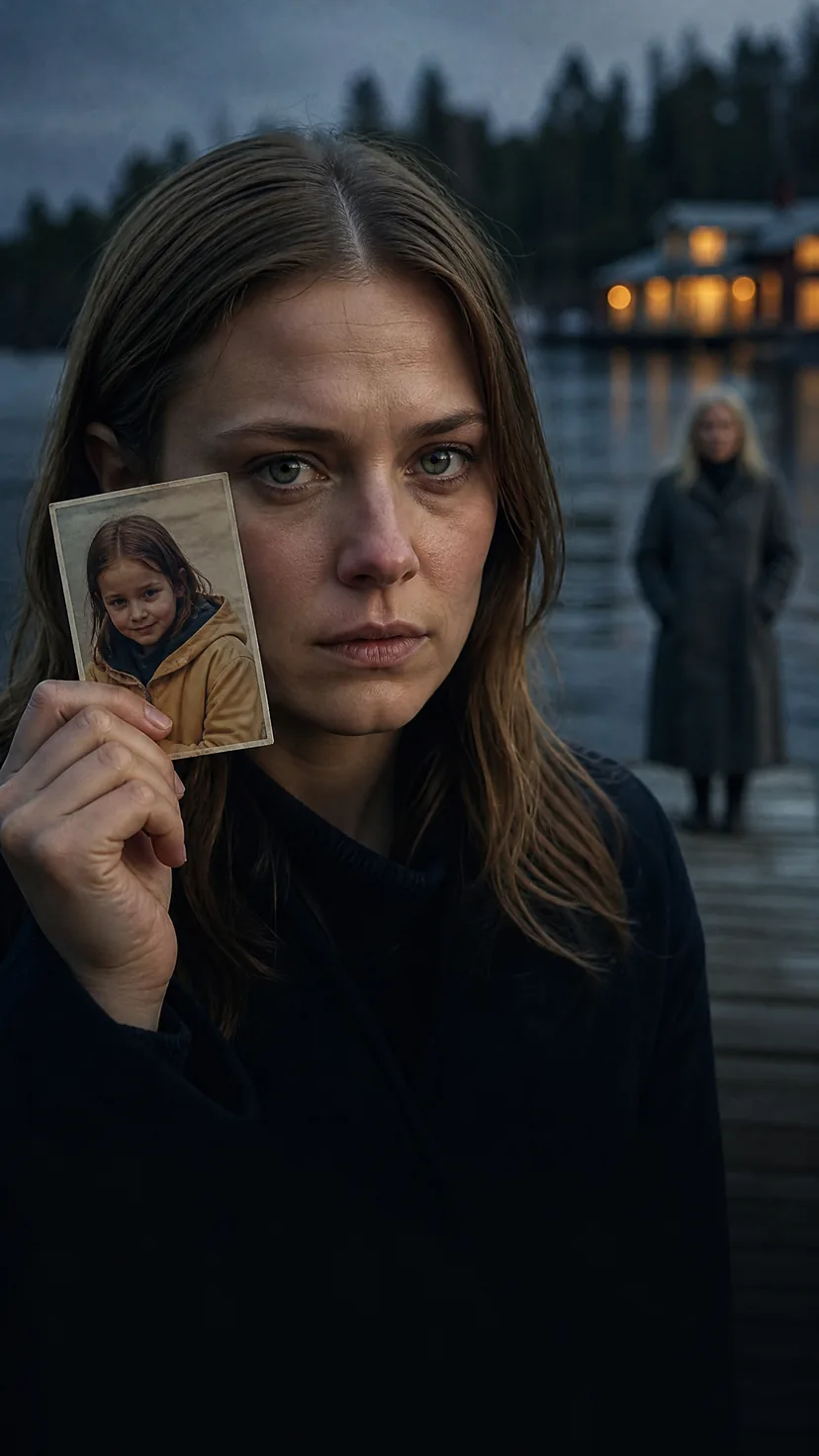
Every file in my father's office was gone, and my mother had signed for the pickup at seven that morning.
I stood in the doorway with the enlargement rolled in a tube under my arm. The filing cabinet hung open on bare runners. His desk had been wiped down to the grain. The papers I'd been given until tonight to sort, every receipt and folder and envelope in his square capitals, were somewhere in a truck, turning into confetti.
She had known. All I had sent her were four texts in the middle of the night, and she had known exactly what to do with them.
"Oh, good, you're early." She was in the kitchen, taping a box shut, steady as a surgeon. A curl of white paper was stuck to the mat by the back door. "The shredding people came. Wasn't that efficient? I saved you a whole afternoon."
"You told me I had until tonight."
"And now you don't need it. Honey, it was tax returns and warranty cards."
"All of it."
"All of it." The tape shrieked off the roll. "Nobody keeps a warranty card for a mower that's been gone ten years."
"What were you afraid I'd find?"
"Tax returns, Ingrid. Do you want to read those? Be my guest. Oh, I can't, they're gone."
She smiled at me. I had never wanted so badly to see her hands shake, and they didn't.
I pushed the plates aside and unrolled the print across the table, pinning the corners with her tape dispenser and a coffee mug. The dock. The girl in the yellow raincoat. The woman at the end of it, one hand on her back.
I put my finger beside her. "That's you."
My mother looked at it for exactly as long as it took to be polite. Her hands stopped. Then she went very still, and then very kind.
"Sweetheart. That's a gray coat. Half the women in Minnesota owned that coat in 1994."
"The hand. The way she's standing."
"Everybody's back hurts." She smoothed the paper flat where it had curled. "You can make a picture say anything, Ingrid. That's your whole job."
It landed exactly where she'd aimed it. I touched my lip before I could stop myself, and she watched me do it.
"Go see your brother," she said gently. "He's at Erik's game. Everyone needs a breath."
"The lab stamp says October 1994."
"Labs make mistakes. Your father wrote the wrong year, I told you that."
"Twice? On the stamp and the pen?"
"Ingrid." Tape, fold, press. "I have a house to sell."
I rolled the print back up. She went on taping the box, and I could not find one thing to hit.
The school field was frozen into ruts, and the cold came up through my shoes. Parents stood along the sideline in puffy coats holding paper cups. Danny stood a little apart with a whistle on a cord, shouting "Shape, shape, spread out" at a pack of eight-year-olds who were all chasing the same ball.
He saw my face before he saw the tube. "Okay, okay. Ingie. Did she hand you the packing tape?"
"She shredded Dad's files."
"What? When?" He winced. "Okay. That's Mom. That's grief with a to-do list." He blew the whistle at nothing. "She's wrecked, you're wrecked, I'm wrecked. Everybody take a breath."
"Don't."
He looked at me properly then, at the shadows under my eyes and the tube I was strangling. "You didn't sleep."
"I was working."
"On what?" He waited. I didn't answer, and he let it go, the way he lets go of everything, and went back to the field. "I keep looking for him," he said, so quietly I almost missed it. He nodded at the far goal. "Erik scored last week, and I turned around to check behind that net. Stupid. He always stood there. Never with the other parents. Hands in his pockets, jingling his keys, and when the game ended he'd nod once. That was the whole review."
My throat closed. "Back wall at my recitals. Under the exit sign."
"Same nod?"
"Same nod."
We both looked at the empty grass behind the net. Then I pulled the original out of my coat, the one that had lived in his locked drawer, and put it in his hand.
"Look at her. Please."
He laughed, because Danny laughs. "Is this you? Look at the tooth." Then he turned it over. He read my father's capitals. He turned it back.
The whistle slid out of his fingers and hung on its cord.
"Danny."
"Wait." He wasn't looking at me. A kid screamed on the field; someone scored; nobody cheered. "That's a raincoat. It's yellow."
"You know her."
"I don't." He said it fast. "It's Lake Quill, that's where Dad fished, Mom told me that. I've never even been." Then, slower: "There was a girl in the back seat. Next to my car seat. I was two, that isn't a memory, it's just..." He pressed the heel of his hand against his eye. "She held my hand. And somebody was singing up front. A man. I always figured it was the radio."
"Who was singing?"
"I don't know, Ingrid. Something low, no words I could ever catch. Then the window went white. No snow on it. White all over, like somebody pointed a floodlight at the glass."
"What did Mom say, when you asked?"
"I never asked. I woke up screaming once, I was maybe five, and she said it was a bad dream. She said I'd had it before." He finally looked up. His face had gone the color of the sky. "But she was real. The girl. She was warm. She held my hand the whole time, the whole night of the accident, until the ambulance came."
The field went on without us. Somewhere a mother yelled, "Good hustle, Erik."
"What accident?" I said.
Danny stared at me. "Mom's accident. In '93."
I shook my head.
"Ingie," he said slowly. "Nobody ever told you?"