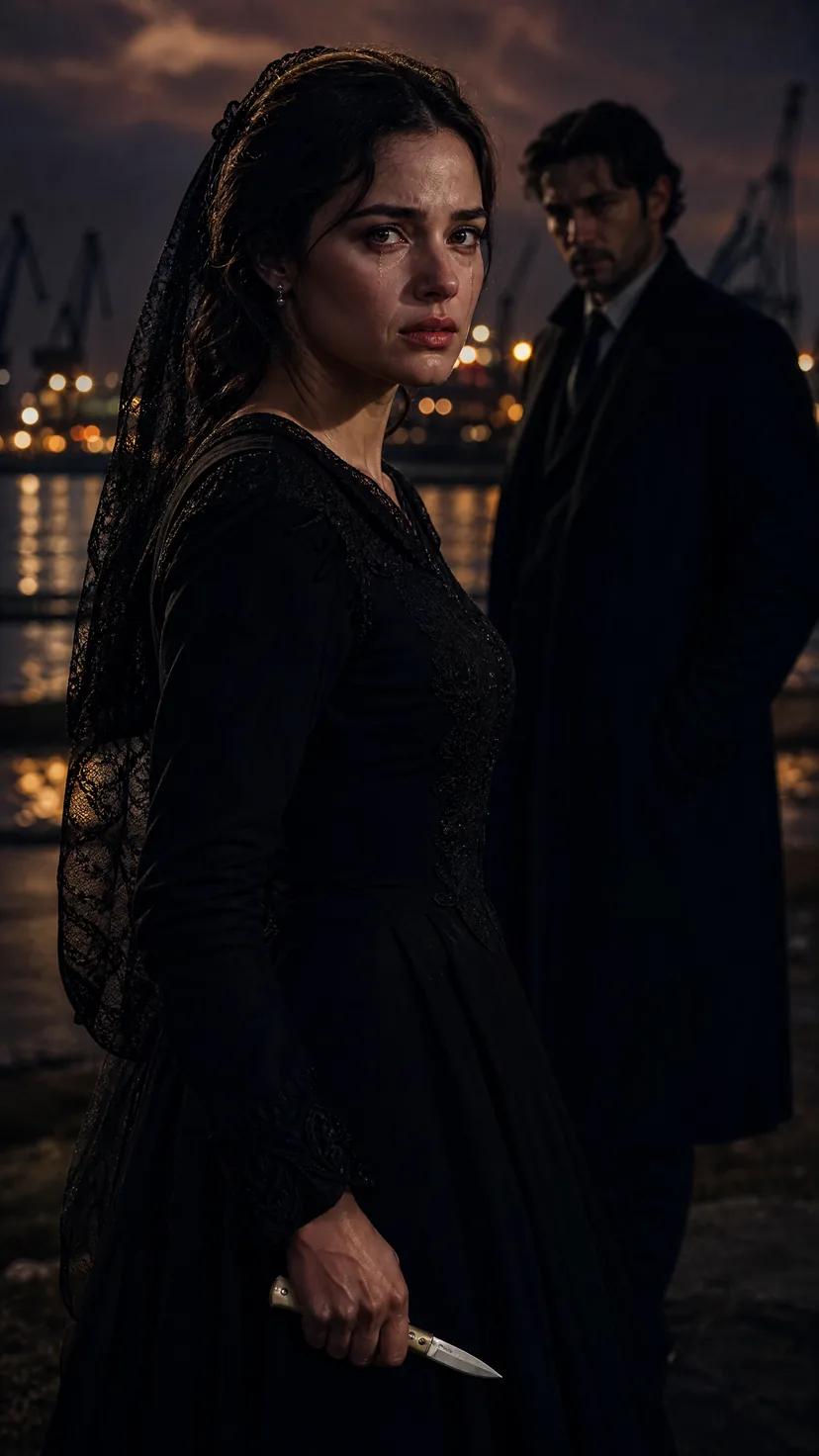
On Wednesday Rafe confronted his cousin, and Enzo swore on his mother's grave that he had been at the Lantern Room casino all night on October tenth. Rafe believed him. The Pier 9 gate log for that night had been wiped clean, and I did not believe a man who needed his own log erased.
So on Friday, the last day of October, I put on my wedding ring and went to the one place in Port Morrow where the Corvinos kept their paper. Who was Enzo, if he had been telling the truth? I had stopped being able to hope he was.
The Lantern Room smelled of carpet cleaner and cut lemons. The floor manager knew who I was before I gave my name. "Mrs. Corvino," he said, as if I had been born with it, and walked me past the cash cage to a door marked ACCOUNTS.
I let him unlock it. I told him I wanted the October files for a year-end tax review, and that the Don's wife had a right to read her own books. He left me with the lamp on.
The desk was a mess of the kind I trust. Bookkeeping has one law, which is that nobody lies in every column, and I went looking for the one he had forgotten.
Under a stack of chip counts I found the marker book. October tenth, Enzo Corvino, signed for a line of credit at 10:40 p.m., his big looping E. I turned the pages forward. Nothing. No second marker, no comp slip, no tab at the bar. The next entry in his name was 1:55 a.m.
Three hours and fifteen minutes in which Enzo had signed for nothing, in a casino where he signed for everything.
Under the marker book lay a thick envelope from the security contractor, who billed the Corvinos by the swipe. I had done the same arithmetic for my father's warehouses since I was nineteen, and I knew where a contractor hides the truth: in the itemized pages nobody reads. September and October, badge by badge, thirty-one pages of it.
I ran my finger down October. I did not hurry. The paper had a slight grain and my fingertip caught on every date.
Oct 10. 11:47 p.m. Badge: E. Corvino. Pier 9, pedestrian gate. Entry.
Eleven minutes before the shot. I photographed the page, then the page after it, then the cover with the contractor's name, my hands steady for exactly as long as the phone needed them to be.
"Ferro."
He filled the doorway. Enzo, twenty-nine years old and wearing a good suit badly, with his tie pulled down and a toothpick in the corner of his mouth. He did not look angry. That frightened me more.
"Look at you," he said. "Playing accountant."
"Tax review. The new year." My voice came out level. "I'm the Don's wife now. I was told I could read my own books."
"Told by who?"
"By your cousin. Ask him."
He came in and put one hand flat on the doorframe, the other in his pocket, and now the door was a thing he stood in rather than a way out. He was close enough that I smelled whiskey and the toothpick's mint. His eyes went to the desk. To the envelope, open. To the thirty-one pages with my fingerprints on them.
"Funny thing about taxes," he said. "They're mostly in April."
"I'm an early girl."
The toothpick moved from one side of his mouth to the other. In the main room a slot machine sang its three notes.
"Go home, Ferro," Enzo said softly. "Eat Serafina's bread. Be a Corvino."
He took his hand off the doorframe. I walked out past him with the envelope under my arm, and he let me, and that was the cost: a man who lets you leave is a man who has decided what to do about it later.
That night the wind came in off the water hard enough to rattle the terrace doors at Gull Point. Rafe stood at the rail in his shirtsleeves. I put the pages in his hand and told him where to look.
He read them under the lamp. Page one, page two. When he reached October tenth he stopped, and I watched him become perfectly still, the way he did when something went through him.
"Eleven forty-seven," he said.
"His car stayed outside the fence with its lights off. His badge opened the gate. Sergio Hensley said a man in a gray coat walked toward the boat steps about then."
He folded the pages once, carefully, as if they might bruise. "He's my cousin. He's twenty-nine."
"I know."
"Livia."
My hand was on his lapel, or his was at my jaw, and then his mouth was on mine and it was nothing like the altar. It was slow. He kissed me as though he were reading me, line by line, and I let him, and I kissed him back with the whole taut length of a month, my fingers in the cold hair at his neck, cedar and rain and the salt of the wind.
I had married the man I came to stab. I wanted him. Nico would have laughed until he had to sit down, and I would have thrown the burnt toast at his head.
Rafe was the one who stopped. He rested his forehead against mine, breathing like a man who had run up the cliff stairs.
"I will face him myself," he said. "Tonight. Go inside."
"Rafe."
"Go inside, Livia."
He kissed my knuckles, once, and was gone down the steps. The car left the drive a minute later. I stood in the wind with my mouth still burning and understood how much I could lose.
Serafina found me in the kitchen at eleven, standing over the bread she had set to rise. She put a cup of tea in front of me and a look beside it.
"Enzo's men took his things from the guest wing an hour ago," she said. "Two suitcases. He told the driver he's done with this family."
"Did Rafe reach him?"
"Eat something, child."
I did not eat. I sat with the pages and my phone and the dark window until near midnight, when the phone lit against the table.
A text, from Enzo's number. No greeting.
I saw who did it. He left in a boat your family paid for.